

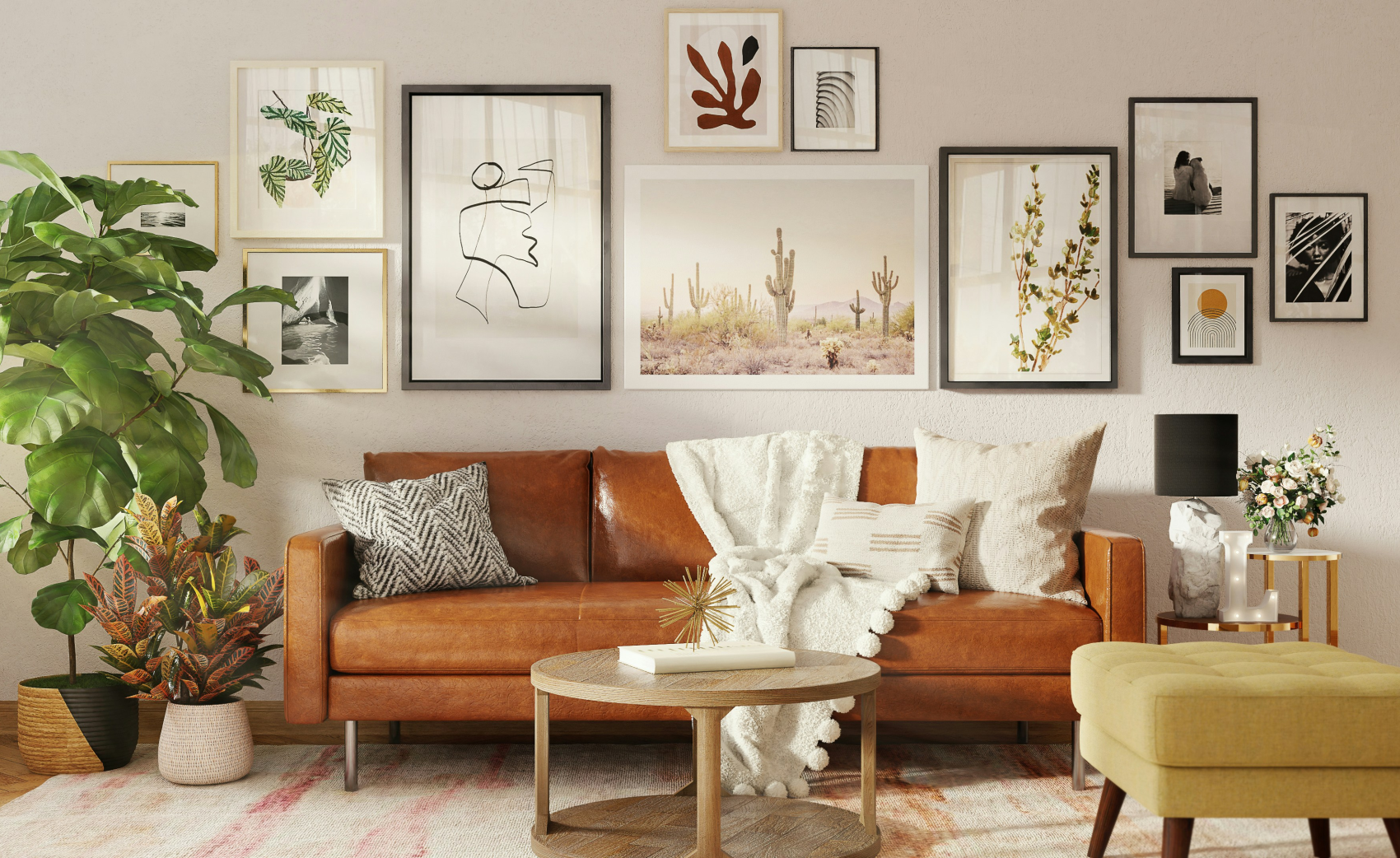
The choice of picture frames should be based on the style of your living space and the artwork you plan to hang; harmony and unity are key. Don’t limit yourself to hanging a single piece on the wall for appreciation—combining multiple pieces creates a striking effect that will make the entire room shine.
Here, we’ll share a few clever ways to use picture frames and mirror frames to decorate walls in different living spaces. After reading this, you can immediately put these ideas into action based on your home’s style and personal preferences.
Tip 1: Photo Display Rack
Install an easy-to-use, long, narrow display rack across an entire wall and fill it with family photos. Although the photos may vary in size, using frames in the same color palette naturally draws the eye to the photos themselves.
Tip 2: Creative Colorful Frames
The key to selecting artwork is, of course, color. Try vibrant, high-saturation hues—stripes, color blocks, and geometric patterns can all showcase color effectively without disrupting the composition. If the mood strikes you, you can even create your own doodle to display; it’s sure to be a unique piece of art.
Tip 3: Abstract Art
Abstract art is well-suited for reading nooks; it’s not overly flashy. Instead, you can gaze at these pieces and let your imagination wander during breaks from reading or while sipping tea. Choose color tones that complement your furniture or carpet to ensure a harmonious look.
You can solve the problem of hanging artwork by installing a shelf on the wall, with the length determined by the wall space available. This way, you won’t have to puncture the wall with countless holes, and it’s easy to rearrange the art or swap in new pieces whenever your mood changes. Arrange the art based on its size and subject matter—an overly cluttered or rigid layout will detract from the effect.
Tip 4: Miniature Artworks
Not sure where to place small oil paintings or photographs? Display them on the mantelpiece, grouping them by color and theme.
Tip 5: Flowers on the Wall
We love bringing green plants into our living spaces—not only because photosynthesis provides ample oxygen, but also because that vibrant touch of green is always ready to soothe weary nerves. However, not everyone is able to keep all kinds of plants looking fresh and healthy. What can you do? You can turn to decorative art; with it, any exotic plant you love can be with you at all times.
Tip 6: Photos and Wallpaper
When selecting artwork, consider whether it clashes with other decorative patterns on the wall. The color of the artwork’s frame complements the soft tones of the wallpaper, creating a harmonious look.
Tip 7: Modern Art
Many small modern art prints can be arranged together to form a new, large-scale artwork. A checkerboard-style layout further highlights the colorful pieces.
Tip 8: Romantic Staircase
A set of photos can fill the empty space on the wall next to the staircase. Be sure to arrange them closely together to create a sense of unity; the colors and brightness of each photo should be similar, and the photos should match the frames.
Tip 9: Elegant Mirrored Frames
Don’t worry about clashes in style, material, or color when using decorative frames collected from your travels. Mount mirrors inside them and display them together on the wall—they’re sure to become a highlight of your living space.
There’s a wide variety of decorative frames to choose from: minimalist wood, vintage wrought iron, solid brass, or lacquered finishes. Stick to neutral colors to let the shapes and materials take center stage.
Tip 10: A Collage of Old Photos
In the past, living rooms focused on designing accent walls in the entertainment area, but now the focus has shifted—let’s direct our attention to the wall behind the sofa. Black-and-white art photography paired with a vibrantly colored sofa creates a beautiful decorative piece in its own right.
Black-and-white photos are masters at storytelling, so the frames you choose should be as simple as possible—allowing the captivating narrative to unfold naturally, letting you appreciate the artistic atmosphere and sense the emotions of the people and events captured at that moment. When selecting images, categorize them—such as people, events, landscapes, or still lifes—and hang them accordingly to avoid one narrative interfering with another. Images with similar themes can be grouped together to form a small collection, much like a book with paragraphs and chapters, creating a neat and orderly display.
Blog